Meta Description: Learn everything about Artificial Intelligence (AI) in 2025 — its definition, history, key areas, real-world applications, benefits, challenges, and future trends. Perfect for beginners and tech enthusiasts.
1. What is Artificial Intelligence (AI)?
Artificial Intelligence (AI) is a branch of computer science that focuses on creating machines capable of performing tasks that require human intelligence. These tasks include reasoning, learning, problem-solving, perception, and decision-making.
In simple terms, AI enables a machine to “think” and “act” like a human, but often faster, more accurately, and without fatigue.
AI systems rely on:
- Data – The fuel that powers AI models.
- Algorithms – The rules and logic for processing data.
- Computing Power – Modern hardware like GPUs that make complex calculations possible in seconds.
2. A Brief History of AI
Understanding AI’s history helps appreciate its rapid progress:
- 1950s – Alan Turing introduced the concept of machine intelligence and the famous Turing Test.
- 1956 – The term Artificial Intelligence was officially coined at the Dartmouth Conference.
- 1970s–80s – Expert systems emerged, enabling early AI decision-making in specialized fields.
- 1997 – IBM’s Deep Blue defeated world chess champion Garry Kasparov.
- 2010s – Deep learning and big data accelerated AI adoption.
- 2020s – Generative AI (like ChatGPT and MidJourney) revolutionized content creation.
3. Core Characteristics of AI Systems

AI systems are typically designed to:
- Perceive – Understand input from sensors, text, speech, or images.
- Analyze – Process and interpret information to find patterns.
- Decide – Make predictions or choose the best course of action.
- Learn – Improve over time through feedback and new data.
4. Key Areas of Artificial Intelligence
4.1 Machine Learning (ML)
Machine Learning allows computers to learn from data without being explicitly programmed. It’s the backbone of most modern AI applications.
- Example: Netflix recommending movies based on your watch history.
- Types:
- Supervised Learning
- Unsupervised Learning
- Reinforcement Learning
4.2 Deep Learning
A subset of ML that uses neural networks with many layers to process complex patterns.
- Example: Facial recognition on smartphones.
4.3 Natural Language Processing (NLP)
Enables AI to understand and generate human language.
- Example: Chatbots, language translation, sentiment analysis.
4.4 Computer Vision
Gives machines the ability to interpret and analyze images or videos.
- Example: Detecting defects in manufacturing, medical imaging analysis.
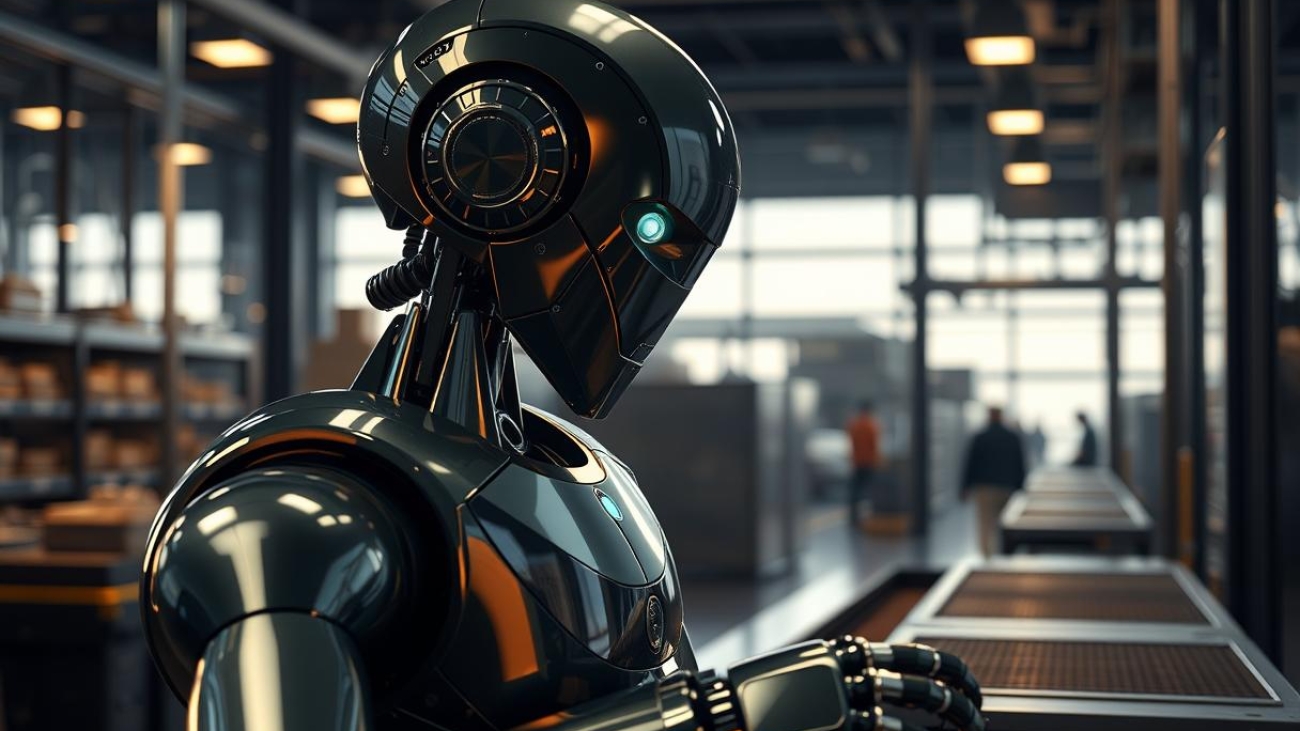
4.5 Robotics
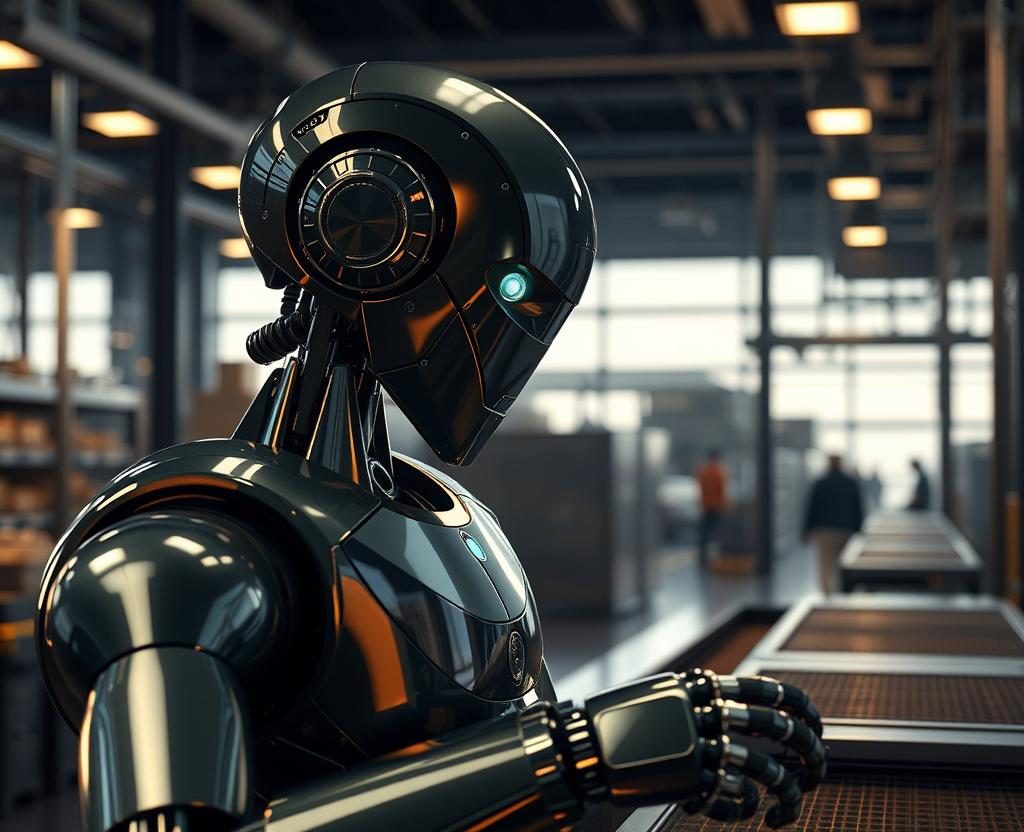
Combines AI with mechanical engineering to create intelligent machines that can interact with the physical world.
- Example: Warehouse robots like Amazon’s Kiva system.
4.6 Expert Systems
AI programs designed to solve problems in a specific domain using a knowledge base and set of rules.
- Example: Medical diagnosis systems.
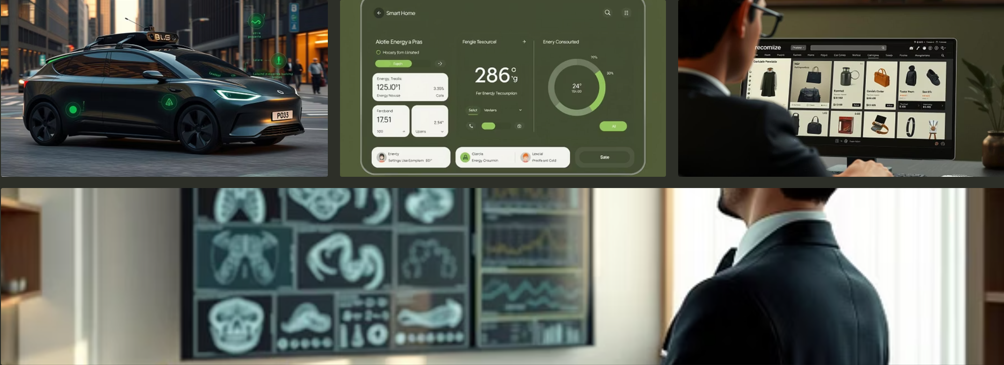
5. Real-World Applications of AI in 2025
| Industry | AI Applications | Examples |
|---|---|---|
| Healthcare | Disease diagnosis, drug discovery, personalized medicine | IBM Watson Health |
| Finance | Fraud detection, algorithmic trading, credit scoring | Mastercard AI Fraud Detection |
| Retail | Personalized recommendations, demand forecasting | Amazon product suggestions |
| Transportation | Self-driving cars, route optimization | Tesla Autopilot |
| Education | Personalized learning, automated grading | Duolingo AI Tutor |
| Entertainment | Content recommendation, AI-generated music/art | Spotify AI Playlists |
6. Benefits of AI
- Increased Efficiency: Automates repetitive tasks.
- Cost Savings: Reduces human error and operational expenses.
- Data Insights: Finds hidden patterns in large datasets.
- Scalability: Works on massive workloads without fatigue.
7. Challenges and Risks of AI
- Bias in AI Models – Results can reflect prejudices in training data.
- Job Displacement – Automation may replace certain jobs.
- Data Privacy – Risk of misuse of personal data.
- Ethical Concerns – Decisions made by AI may lack transparency.
8. The Future of AI

By 2030, AI is expected to:
- Power fully autonomous vehicles.
- Revolutionize medical treatments with personalized healthcare.
- Enhance creativity through generative design.
- Integrate more deeply with IoT devices.
Experts predict AI will not replace humans but rather augment human capabilities — creating new opportunities and industries.